

Many people avoid dental treatment because they fear pain or feel anxious about dental procedures. Sedation dentistry offers a solution that helps patients receive the dental care they need while staying comfortable and relaxed.
Understanding Sedation Dentistry
Sedation dentistry uses medication to help patients relax during dental procedures. This approach allows dentists to perform necessary treatments while patients remain calm and comfortable. The medication reduces anxiety and can help patients who struggle with dental fear get the care they need.
Dentists use different levels of sedation based on the patient’s needs and the complexity of the dental procedure. Some patients need light sedation to feel relaxed, while others require deeper sedation for extensive treatments.
Types of Sedation Used in Dental Care
Nitrous Oxide (Laughing Gas)
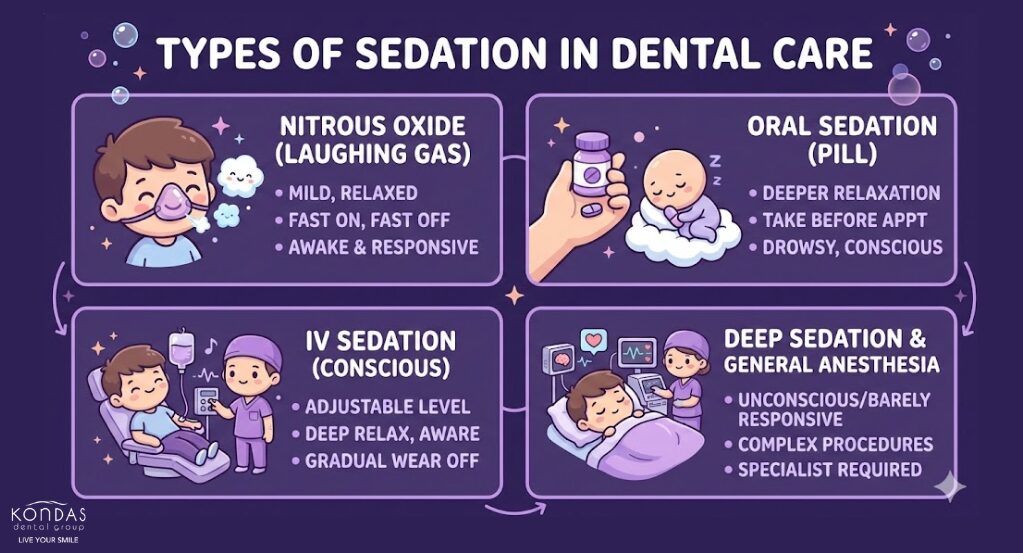
Nitrous oxide, commonly called laughing gas, provides the mildest form of sedation. Patients breathe this colorless gas through a small mask placed over their nose. The gas takes effect quickly and wears off fast once the mask comes off.
Laughing gas helps patients feel relaxed and reduces anxiety during dental treatment. Patients remain awake and can respond to the dentist’s instructions.
This type of sedation works well for routine cleanings, fillings, and minor procedures.
Oral Sedation
Oral sedation involves taking medication by mouth before the dental appointment. Dentists typically prescribe pills that patients take about an hour before their treatment. This method provides deeper relaxation than nitrous oxide.
Patients who receive oral sedation feel drowsy and very relaxed. They remain conscious but may have little memory of the procedure afterward.
This option works well for patients with moderate to severe dental anxiety.
IV Sedation (Conscious Sedation)
Intravenous sedation delivers medication directly into the bloodstream through a small needle in the arm or hand. This method allows dentists to adjust the sedation level throughout the procedure as needed.
Conscious sedation helps patients reach a deeper level of relaxation while still maintaining some awareness. Patients can respond to verbal commands but feel very drowsy. The effects wear off gradually after the procedure ends.
Deep Sedation and General Anesthesia
Deep sedation puts patients into a state where they barely respond to stimulation. General anesthesia makes patients completely unconscious during the dental procedure. These options require special training and monitoring equipment.
Dentists reserve deep sedation and general anesthesia for complex oral surgeries, multiple extractions, or patients with severe medical conditions. An anesthesiologist or a specially trained dentist must administer these types of sedation.
Who Benefits from Sedation Dentistry
Several groups of patients find sedation dentistry helpful:
- Patients with dental phobia or severe anxiety
- People with sensitive teeth or gag reflexes
- Patients who need extensive dental work
- Children who have trouble sitting still
- Individuals with special needs or medical conditions
Sedation helps these patients receive proper dental care without stress or discomfort. Regular dental visits become possible when anxiety no longer prevents treatment.
The Sedation Dentistry Process
Before any sedation, dentists review the patient’s medical history and current medications. They discuss the patient’s anxiety level and explain the different sedation options available. The dentist selects the most appropriate type based on the patient’s needs and the planned procedure.
On the day of treatment, patients receive specific instructions about eating, drinking, and taking medications. Someone must drive the patient home after sedation because the effects take time to wear off completely.
During the procedure, dental staff monitor the patient’s vital signs and comfort level. They adjust the sedation as needed to maintain the right level of relaxation. The dentist can complete the necessary dental work while the patient remains comfortable.
Safety and Monitoring
Sedation dentistry requires proper training and equipment. Qualified dentists monitor patients throughout the entire procedure. They track breathing, heart rate, blood pressure, and oxygen levels to ensure patient safety. Modern monitoring equipment alerts the dental team to any changes in the patient’s condition. Emergency medications and equipment remain available in case of complications, though serious problems occur rarely when proper protocols are followed.
Recovery After Sedation
Recovery time depends on the type of sedation used. Nitrous oxide wears off quickly, and patients can drive themselves home after a few minutes of breathing regular air. Other forms of sedation require longer recovery periods.
Patients who receive oral sedation, IV sedation, or general anesthesia need someone to drive them home. They should rest for the remainder of the day and avoid making important decisions or operating machinery. Most people feel back to normal within 24 hours.
Is Sedation Dentistry Right for You?
Sedation dentistry benefits many patients, but it may not suit everyone. People with certain medical conditions, pregnant women, and those taking specific medications may not be good candidates for certain types of sedation.
Your dentist will evaluate your medical history, current health, and anxiety level to determine if sedation dentistry makes sense for your situation. They will explain the benefits and risks of each option to help you make an informed decision.

Finding a Qualified Sedation Dentist
Not all dentists offer sedation services. Look for a dentist with proper training and certification in sedation techniques. Ask about their experience, safety protocols, and emergency procedures.
Sedation dentistry transforms the dental experience for anxious patients. This approach allows people to receive necessary dental care in a comfortable, stress-free environment.
Talk to your dentist in Huber Heights about sedation options if anxiety prevents you from getting the dental treatment you need.
FAQs: Common Questions About Sedation Dentistry
What does dental sedation involve?
Dental sedation involves using medication to help patients relax during dental procedures. Your dentist will select the right type of sedation based on your anxiety level and the complexity of your treatment.
Can you feel pain during sedation dentistry?
Sedation dentistry significantly reduces or eliminates pain during dental procedures. The sedation helps you relax while local anesthesia blocks pain signals.
How long does dental sedation last?
Nitrous oxide wears off within 5 to 10 minutes, while oral and IV sedation can last 2 to 8 hours. Recovery time depends on the type of sedation used and your body’s response.
What is the most feared dental procedure?
Root canal therapy ranks as the most feared dental procedure, followed by tooth extractions and oral surgery. Sedation dentistry helps patients overcome these fears by providing a calm, comfortable experience.
What should you not do before dental sedation?
Do not eat or drink for 6 to 8 hours before IV sedation or general anesthesia. Avoid alcohol for 24 hours and arrange transportation home since you cannot drive after sedation.
