You brush your teeth every day. You try to floss when you remember. Yet somehow, you’ve noticed hard, yellowish deposits forming along your gum line that won’t budge no matter how hard you scrub.
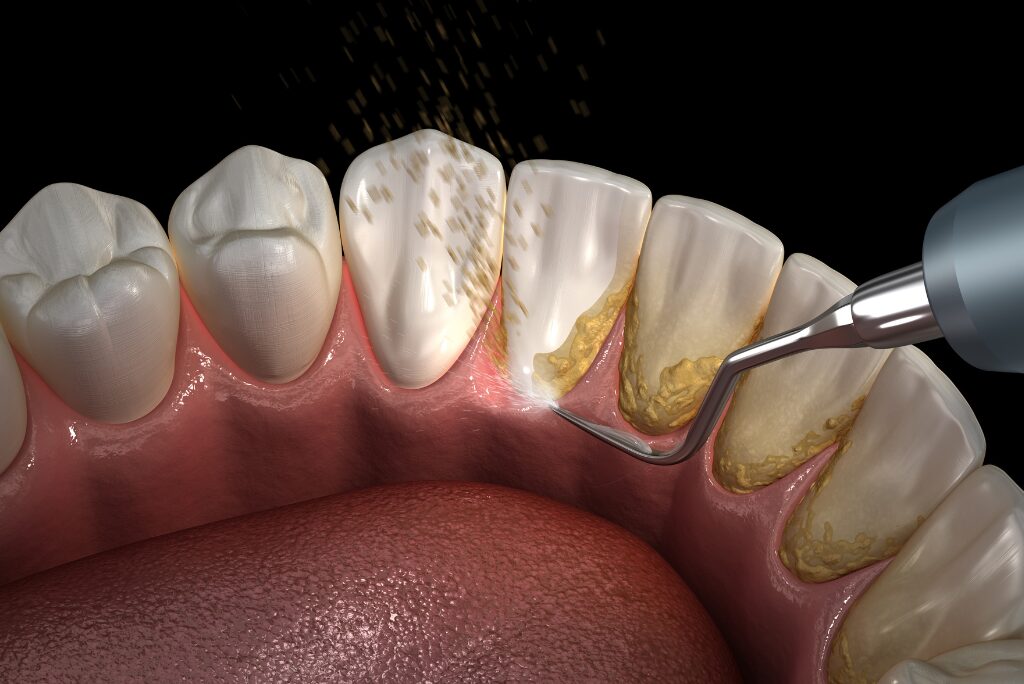
You’re dealing with hard plaque on teeth, also known as tartar. And here’s the thing: once dental plaque hardens, your toothbrush can’t remove it. That’s not a failure on your part. It’s just how tartar works.
The good news is that hard plaque is a common problem with a straightforward solution. Let’s talk about what causes it, why it matters for your oral health, and how to get rid of it for good.
What Is Hard Plaque and How Does It Form?
Every time you eat, bacteria in your mouth get to work. They feed on food particles, especially sugars and starches, and produce acids. This process creates dental plaque—a soft, sticky film that coats your teeth throughout the day.
When you brush and floss, you remove most of this plaque before it causes problems. But any plaque you miss starts to change. Minerals in your saliva, like calcium and phosphate, seep into the soft plaque and harden it. This process is called calcification.
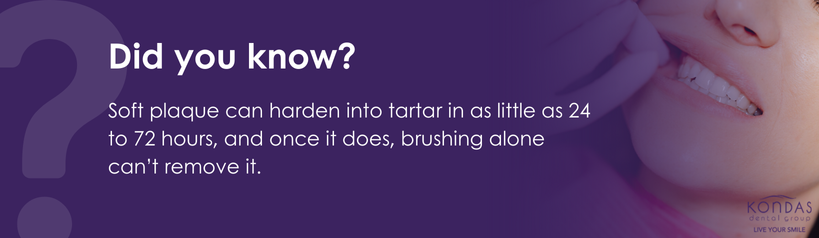
Within 24 to 72 hours, soft plaque transforms into tartar buildup. At this point, it bonds directly to your tooth enamel.
No amount of brushing will remove it.
Tartar often forms in spots that are easy to miss: along the gum line, between teeth, and on the back surfaces of your lower front teeth. If you’ve ever run your tongue along your teeth and felt a rough, crusty texture, that’s tartar.
Why Does Hard Plaque Build Up on Teeth?
Inconsistent brushing tops the list. When you skip brushing your teeth or even rush through it, plaque has more time to harden. Brushing twice a day for two full minutes gives you the best chance of catching plaque before it calcifies.
Technique matters too. Many people brush the fronts of their teeth well, but neglect the backs and the areas along the gum line. These hidden spots become prime real estate for tartar.
Don’t forget about your diet. Sugary foods and starchy snacks feed the bacteria that create plaque. The more fuel you give them, the more plaque they produce.
Some factors are out of your control. Your saliva’s mineral content affects how fast plaque hardens. Some people’s saliva promotes faster calcification than others. Age, medications, and genetics also influence your risk.
What Problems Can Hard Plaque Cause?
Hard plaque isn’t just a cosmetic issue; it can also cause visible yellow or brown stains on your teeth. The real concern is what tartar does beneath the surface.
Gum Disease
Tartar forms a rough, porous surface that allows more plaque to accumulate. It also irritates your gum tissue. Over time, this leads to gum disease, beginning with gingivitis, characterized by red, swollen, and bleeding gums. Left untreated, it can progress to periodontitis, which damages the bone supporting your teeth.
Tooth Decay and Enamel Damage
The bacteria living in and around tartar attack your tooth enamel. This leads to tooth decay, cavities, and sensitivity. Once enamel is gone, it doesn’t grow back.
Bad Breath
Tartar harbors bacteria that produce foul-smelling compounds. If you’ve noticed persistent bad breath despite brushing, tartar might be the culprit.
Cosmetic Changes
Beyond health concerns, tartar affects how your smile looks. It shows up as yellow, brown, or tan deposits along your gum line and between teeth. These stains won’t respond to whitening toothpaste or over-the-counter treatments. Only professional removal will restore your teeth’s natural appearance.
Can You Remove Hard Plaque at Home?
Not really, no. Once tartar bonds to your tooth enamel, no amount of brushing or scraping will remove it safely.
We understand the temptation to try those dental scrapers you see online. But consumer tools lack the precision to remove tartar without gouging your enamel or cutting your gums. What you can do at home is prevent new plaque from hardening through good brushing and flossing habits. For existing tartar, you need professional help.
How Do Dentists Remove Hard Plaque?
A dental hygienist has the training and tools to remove tartar without damaging your teeth. The process is called scaling, and it’s a standard part of every dental cleaning.
During scaling, your hygienist uses specialized instruments to scrape tartar from your tooth surfaces and beneath your gum line. They might use manual scalers or an ultrasonic scaler that vibrates at high frequency to break up deposits. The process takes about 30 to 60 minutes. You might feel some pressure and hear scraping sounds, but it shouldn’t hurt.
For most people, professional dental cleaning every six months keeps tartar under control. If you’re prone to rapid tartar buildup or have gum disease, your dentist might recommend cleanings every three to four months.
Related Article: The Essential Role of Dental Hygienists in Oral Health Care
Prevention Tips From an Expert Hubert Heights Dentist
Our Huber Heights dentist, trusted by many in the Ohio area, says the best way to address hard plaque is to prevent it from forming in the first place. That starts with removing soft plaque before it hardens.
Here’s what works:
- Brush twice daily with fluoride toothpaste. Spend two full minutes each time, and angle your bristles toward the gum line where plaque loves to hide.
- Floss once a day. Brushing misses about 40% of your tooth surfaces, according to Meghan Crow, RDH, MS, MPH, an assistant professor in the Department of Diagnostic Sciences and Surgical Dentistry at the University of Colorado School of Dental Medicine. Flossing reaches the tight spaces where food particles get trapped.
- Use tartar-control toothpaste. Look for the American Dental Association seal of approval. These products contain ingredients that slow calcification.
- Rinse with an antiseptic mouthwash. This helps kill bacteria that brushing and flossing miss.
- Limit sugary foods and starchy snacks. Fewer sugars mean less fuel for plaque-producing bacteria.
- Drink water throughout the day. Water rinses away food particles and keeps your mouth from getting too dry.
Even with perfect habits, some plaque buildup is inevitable. That’s why regular professional cleanings remain essential.
When You Should Visit a Dentist Regarding Plaque Concerns
You don’t have to wait for your next scheduled cleaning if you notice warning signs. Contact your dentist if you experience:
- Visible yellow, brown, or tan deposits along your gum line or between teeth
- Gums that bleed when you brush or floss
- Red, swollen, or tender gums
- Persistent bad breath that doesn’t improve with brushing
- Teeth that feel rough even after you’ve brushed
- Pain or sensitivity when eating hot, cold, or sweet foods
These symptoms suggest plaque buildup that needs professional attention. The sooner you address it, the easier treatment will be.

Take the Next Step for Your Oral Health
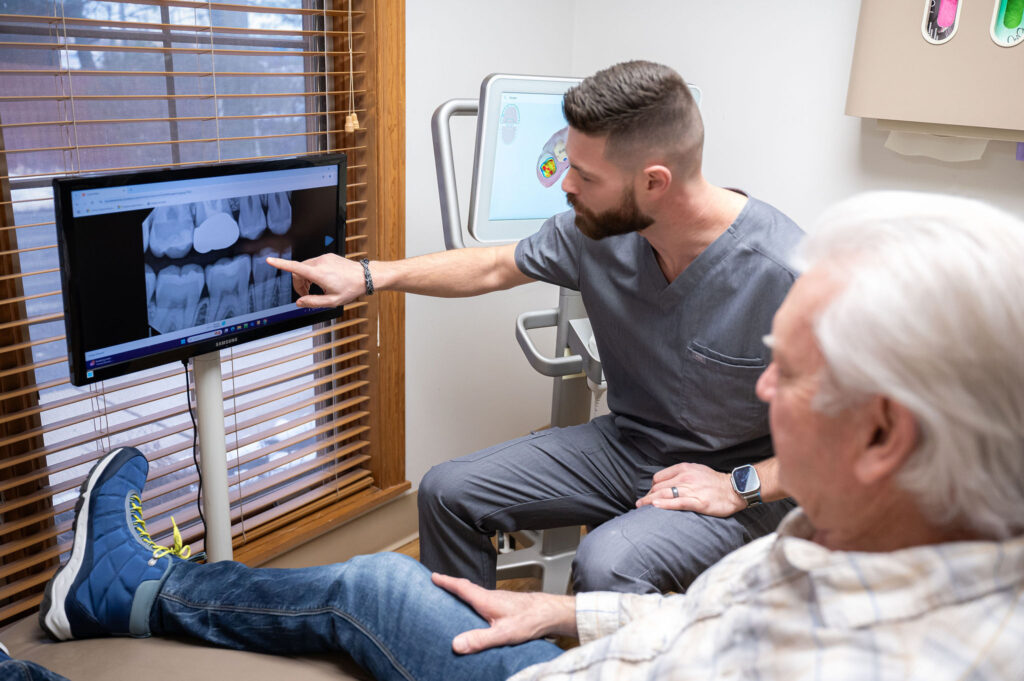
Hard plaque on teeth is frustrating, but it’s not something you have to live with. While you can’t remove tartar at home, a dental hygienist can clear it away in a single visit.
The key is staying ahead of the problem. Brush and floss daily to prevent new tartar from forming. Schedule regular dental cleanings to remove any buildup before it causes damage. And if you notice signs of significant plaque buildup, don’t hesitate to reach out.
Your teeth will thank you—and so will your smile.
